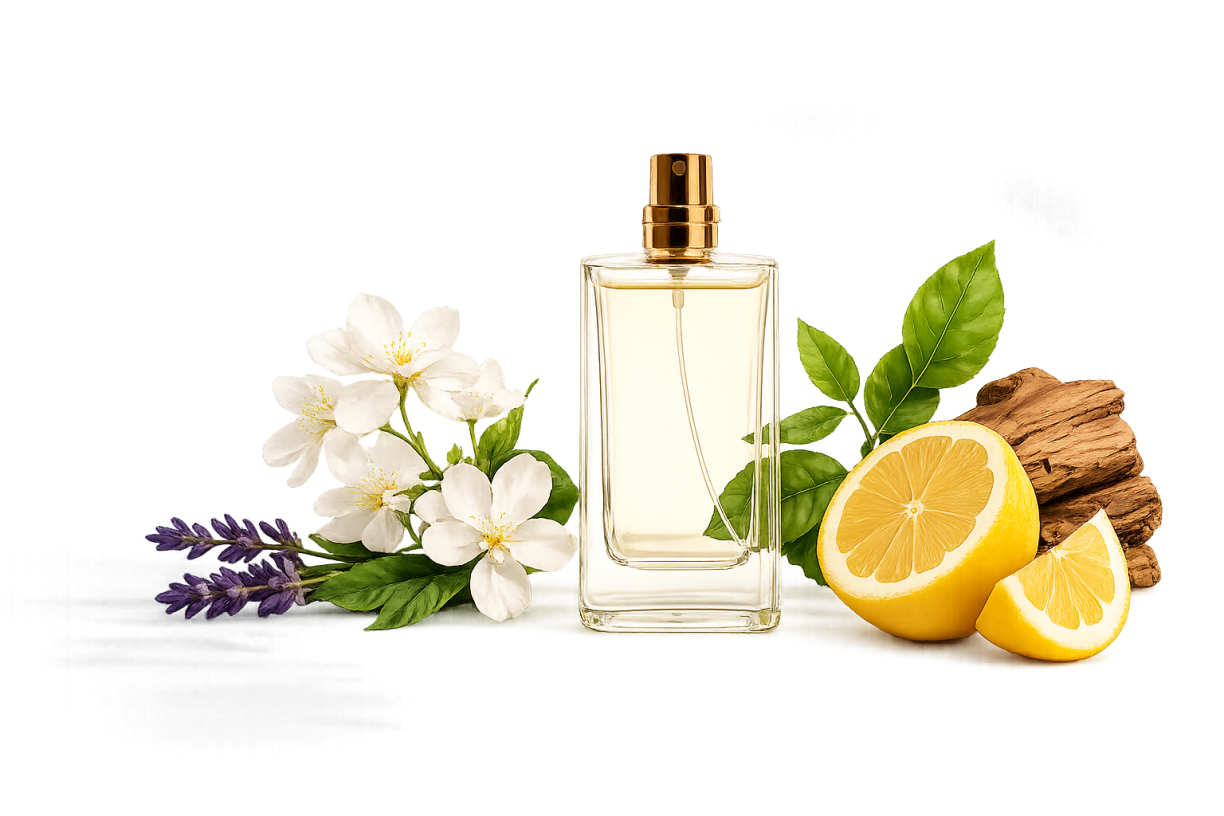
The letters on a bottle (EDT, EDP, parfum) tell you how much fragrance oil is in the formula relative to alcohol. Higher concentration generally means stronger scent and longer wear, but the same perfume can smell different at different concentrations because the balance of notes shifts.
Common concentration types
| Type | Typical oil % | What to expect |
|---|---|---|
| Eau de Cologne (EDC) | 2–5% | Light, refreshing, short-lived. Often reapplied throughout the day. |
| Eau de Toilette (EDT) | 5–15% | Lighter wear, brighter opening. Good for warm weather or office settings. |
| Eau de Parfum (EDP) | 15–20% | Richer and longer-lasting. The most common concentration for new releases today. |
| Parfum / Extrait | 20–40% | Dense, intimate, very long-lasting. A little goes a long way. |
| Body mist / spray | 1–3% | Very subtle. More about a light veil of scent than projection. |
Labels are not standardized
- There is no global law enforcing these percentages.
- One brand's EDT may perform like another's EDP.
- Marketing also plays a role: some houses relabel concentrations over time without changing the formula much.
EDT vs EDP vs parfum
Choosing by concentration
Extrait de parfum
- Extrait (or parfum) sits at the top of the concentration ladder with the highest proportion of aromatic compounds.
- Extrats often emphasize base notes and feel intimate rather than loud.
- You need fewer sprays. Ideal when you want longevity without projecting across a room.
Body mist, oil, and eau de parfum
- Body mists are the lightest option: affordable, refreshing, but short-lived.
- Perfume oils are concentrated and alcohol-free, which can suit sensitive skin, though projection is usually softer.
- Eau de parfum is the everyday standard for most fine fragrances today, balancing richness and wearability.
Concentration is only part of the story. Base-heavy formulas with woods, resins, and musks tend to last longer than citrus-led scents.
Why some perfumes last longer
- Base-heavy formulas with woods, resins, and musks tend to last longer than citrus-led scents.
- Skin hydration, climate, and where you spray also matter.
- Check community performance ratings on Scentapedia to see how long a specific perfume lasts on real wearers.
On Scentapedia
Each perfume page lists its concentration when known. Pair that with community performance ratings to see how long it actually lasts on real wearers, regardless of what the bottle says.