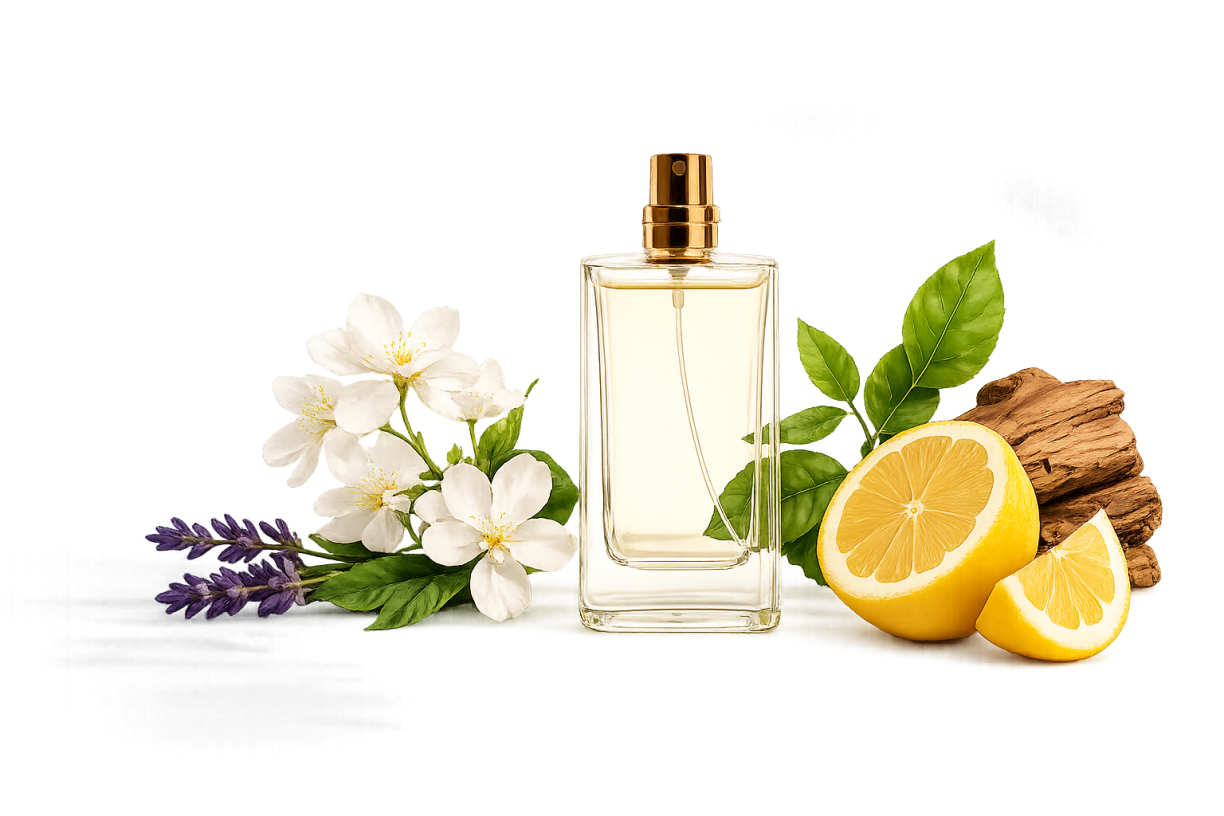
Heat and humidity change how perfume evaporates on your skin. A favorite winter scent can become suffocating in August. A summer citrus might vanish in five minutes in dry cold air. Planning for climate keeps you comfortable and considerate of everyone around you.
Hot weather
- Heat amplifies projection. Your body runs warmer, and fragrance molecules lift off faster and travel further.
- Lighter, fresher scents work best: citrus, aquatic, green, and soft musks.
- Apply less than you would in winter. A scent that feels perfect at 60 degrees can overwhelm at 90. One spray might be enough when you would normally use three.
Humidity
- Moist air slows evaporation, so fragrances can linger longer and smell denser.
- Sweet and floral notes intensify in humidity. Fresh aquatics often shine but can also feel sticky if over-applied.
- Adjust spray count when the air feels thick.
Cold and dry air
- Cold suppresses projection. Richer orientals, ambers, and woods come alive in winter.
- You can wear more without clearing a room.
- Dry winter air also speeds up top-note fade, so hydration matters. Lotion before perfume is your friend from November to March.
Your winter favorite and your summer favorite might be the same bottle at different spray counts.
Heat and bold notes
- Sweet gourmands, spices, and oud multiply in heat. What reads cozy in December can smell sharp and medicinal in July.
- Save heavy compositions for cool evenings or air-conditioned settings.
- Your date-night amber might be perfect at 8 p.m. in a restaurant and a mistake at 2 p.m. on a subway platform.
Build a seasonal rotation
- You do not need twenty bottles. Two or three that match your weather is enough.
- Browse summer-friendly accords on Scentapedia when temperatures rise.
Our fragrance notes by season guide pairs note families with the calendar.