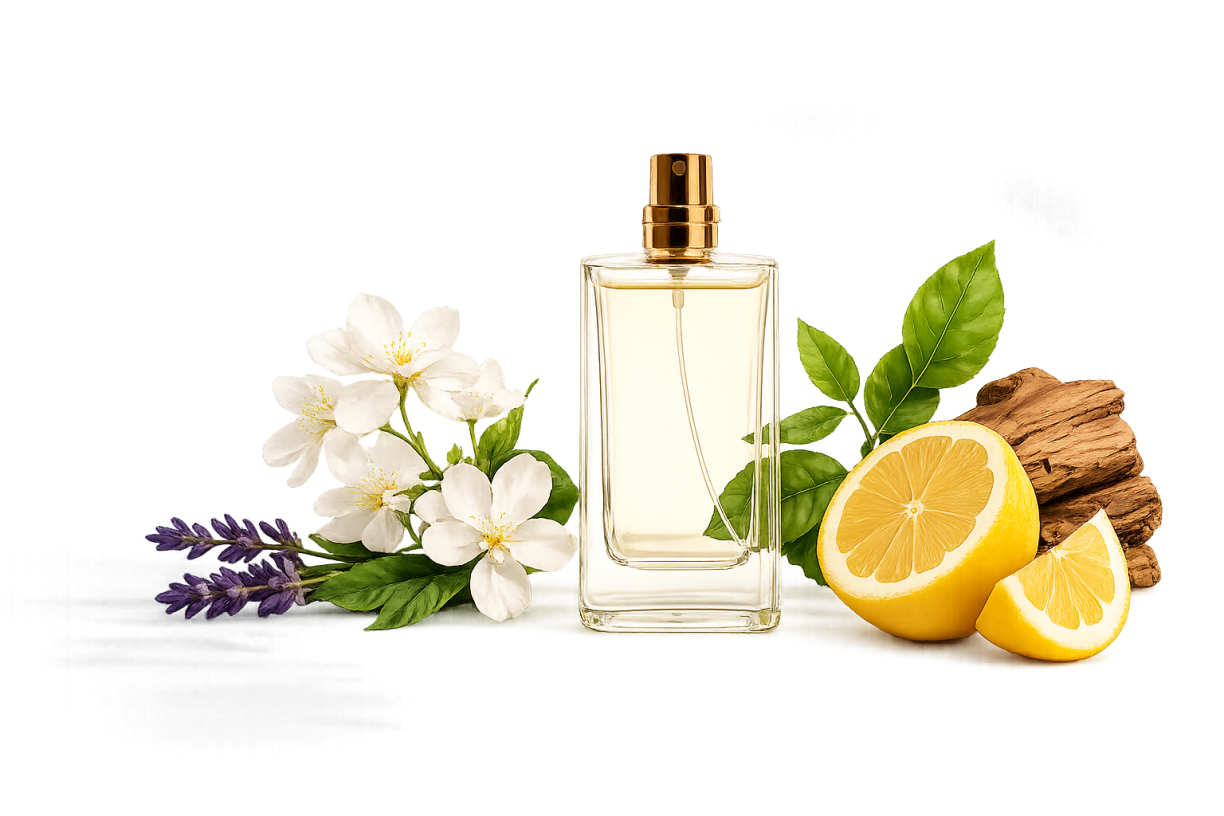
Florals and woods are among the most versatile note families in perfume. The same category can read soft and professional or bold and romantic depending on which flowers or woods dominate and how much you apply. Learning the sub-styles saves you from writing off an entire family after one bad bottle.
Florals: day or night?
Light florals for daytime
- White florals such as tuberose and jasmine turn richer and more sensual at night.
- Rose spans both depending on whether it is paired with citrus or patchouli.
A peony scent at two sprays is brunch. Tuberose at four sprays is a statement.
Sandalwood: the all-season note
- Creamy sandalwood bridges fresh and warm.
- It works in summer at low volume and anchors winter blends.
- Pairs well with florals, spices, and vanilla.
- One of the safest notes to build a wardrobe around if you want one material that does many jobs.
Woody notes: when to wear them
- Cedar and vetiver read crisp and office-friendly.
- Oud and dark patchouli lean evening and cooler months.
- Woods add structure and longevity, so they often appear in bases that carry a scent through the day even when the florals up top have faded.
Combining florals and woods
Why floral-over-wood works
Explore further
Read our floral and woody family guides, or browse matching accords on Scentapedia.