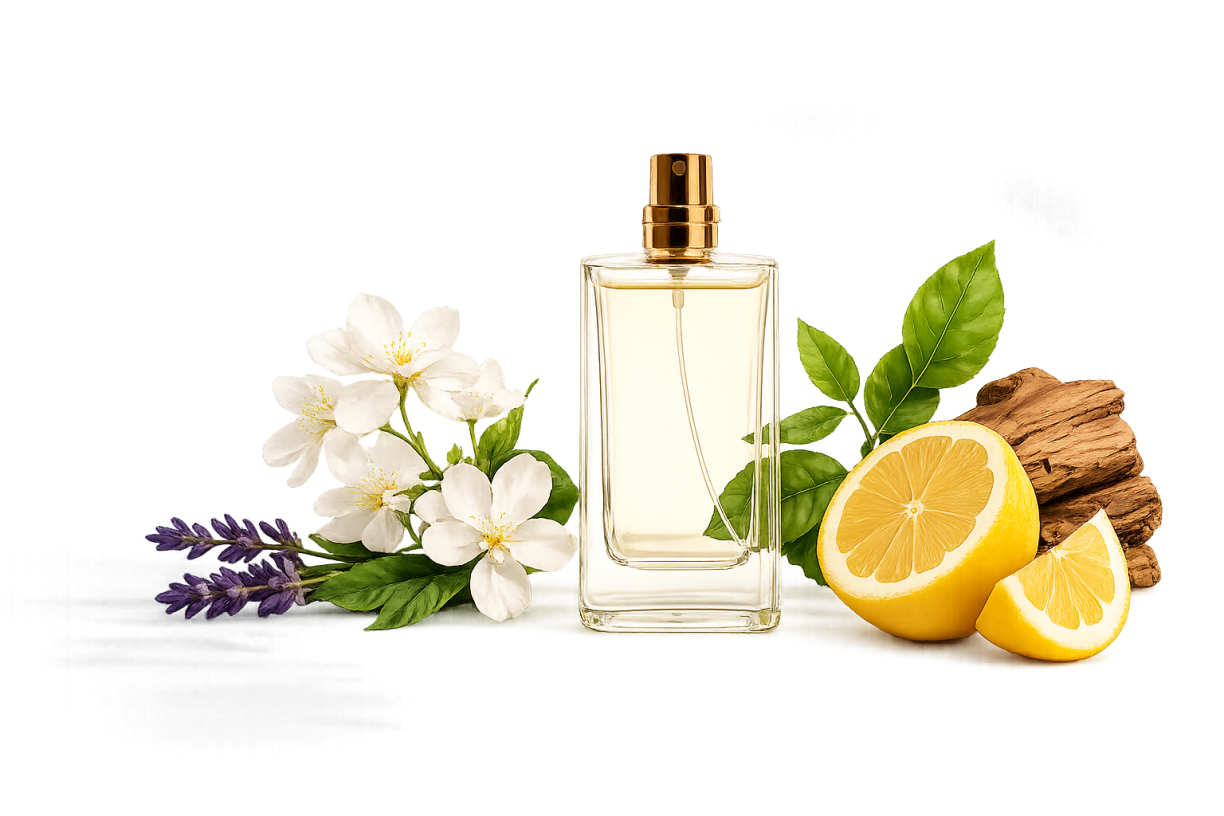
Floral fragrances are built around flowers, real or imagined. They range from a single rose on skin to lush, layered bouquets that shift over hours. Floral is the largest category in perfumery and appears in perfumes marketed to every gender. Knowing a few floral sub-styles helps you avoid writing off the entire family after one bad experience.
Common floral materials
Floral notes you will see often
- Rose, jasmine, peony, iris, lily-of-the-valley" class="text-primary dark:text-primary hover:underline">lily of the valley, and orange blossom appear constantly.
- Jasmine and tuberose can feel lush and heady with an almost narcotic richness.
- Iris and violet lean powdery and refined. Peony and freesia read lighter and more transparent.
Light vs bold florals
- Light florals feel airy and work in offices and warm weather.
- Bold florals with white flowers or heavy indoles make more statement and often perform better in evening or cooler months.
- Not every floral perfume smells like a garden shop: many pair flowers with woods, musks, or fruits for balance.
- If you disliked one floral, try another sub-style before giving up.
- A sharp green floral and a creamy white floral have almost nothing in common beyond the word on the bottle.
One bad floral is not a verdict on the whole family. Sub-styles matter more than the label.
When florals work best
- Florals are among the most versatile families.
- Soft peony scents suit brunch and casual daytime wear.
- Rich jasmine perfumes fit dates and formal events.
- Many florals transition well from day to night if the base includes musk or wood rather than pure sugar.
Find florals you will love
Use our accords glossary to browse floral fragrances, or search specific notes like rose or jasmine in the notes glossary. Compare reviews to see whether a perfume reads fresh and sheer or dense and long-lasting on skin.