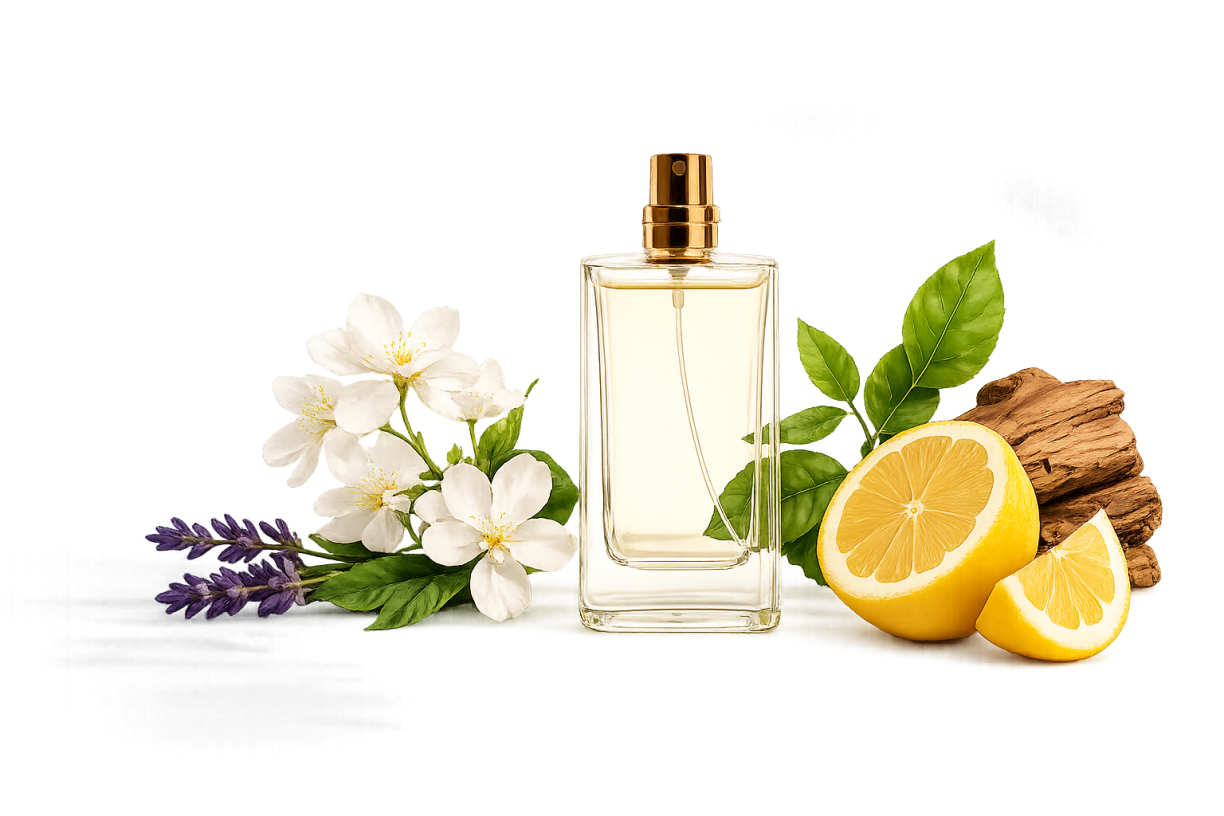
Woody and floral accords are the backbone of modern perfumery. Most fragrances you own probably lean on one or both. Understanding them helps you predict how a scent will feel before you spray, the way knowing chord progressions helps you guess how a song will resolve.
- Neither family is a single smell. Woody spans dry cedar to creamy sandalwood to smoky oud.
- Floral runs from shy peony to opulent tuberose.
- On Scentapedia, accord weights show which side leads and how the partnership plays out over hours of wear.
Woody accords
- Built from cedar, sandalwood, vetiver, patchouli, and oud. Woody accords add structure, longevity, and warmth.
- They range from crisp and dry to creamy and smoky.
- Woods often appear in the base and carry a fragrance for hours, like the foundation of a house holding everything else up.
- Cedar and vetiver read sharp and professional.
- Sandalwood and certain musks feel softer and more skin-like.
- Oud and dense patchouli bring drama and projection.
When you filter woody accords on Browse, read note lists to see which wood is actually driving the accord, not just the tag on the page.
Floral accords
- Rose, jasmine, peony, iris, and ylang-ylang create floral accords from delicate to opulent.
- Florals frequently sit in the heart of a perfume and define its character for most of the wear time.
- They are the melody while woods often provide the bass line.
- Light florals like peony and freesia suit daytime and warm weather.
- Rich white florals like jasmine and tuberose can feel evening-ready and project farther.
- Powdery iris blurs the line between floral and musk accords.
Browse floral accords in the accords glossary to compare how different flowers behave in linked perfumes.
Why they work together
- Woods ground florals so they do not turn purely sweet.
- Florals soften woods so they do not feel austere.
- Many bestselling perfumes are essentially a floral-woody partnership with a fresh or amber accent on top.
- It is one of the oldest balancing acts in the book because it simply works on skin.
- A rose-oud pairing reads Middle Eastern and opulent. Rose with cedar reads classic and tailored.
- Peony with sandalwood reads modern and easy. Same two accord families, completely different moods.
Wood is the bass line. Flower is the melody. Most modern perfumes are both.
Light vs dense woody florals
- Light floral-woody blends work year-round for day wear. Think transparent woods with a single soft floral note and maybe a citrus opening.
- Dense woody florals with heavy patchouli, oud, or indolic jasmine suit evenings and cooler months when you want more presence.
- If you are building a wardrobe, one light woody floral and one richer woody floral cover most situations.
Read floral and woody notes: when to wear them for timing advice and accords by occasion for setting-specific picks.
Common pairings to know
Explore on Scentapedia
Browse woody and floral accords in the accords glossary, or read our woody and floral family guides for broader context. Use using accords to discover perfumes if you want to branch out from a favorite woody floral you already own.