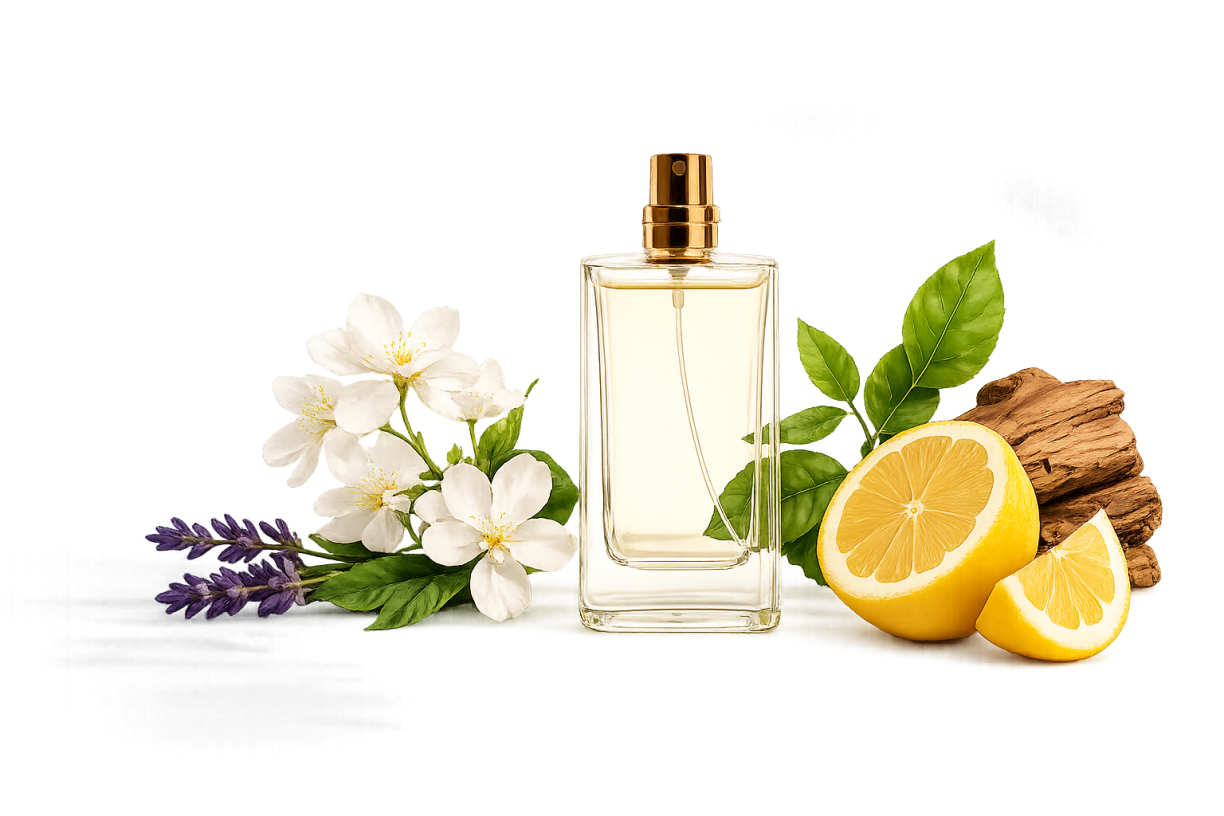
Citrus notes are usually the first thing you smell. They create brightness, energy, and immediate appeal. They also fade the fastest, which shapes how perfumers use them. Understanding citrus is understanding the opening act of perfumery: the handshake before the conversation begins.
Bergamot: the workhorse
- Bergamot is the king of top notes. Earl Grey tea, classic colognes, and countless modern releases open with it.
- It is floral-citrus, slightly bitter, and incredibly versatile.
- Unlike sharp lemon, bergamot has a rounded quality that plays well with woods, florals, and even light ambers.
Search bergamot in the notes glossary and notice how many unrelated perfumes share it. That alone tells you how central it is to the craft.
Lemon, orange, and mandarin
- Lemon is sharp and clean, the note of fresh-squeezed zest and polished surfaces.
- Sweet orange and mandarin feel juicier and friendlier, with less bite.
- Blood orange adds a sophisticated twist: citrus with a dark fruit undertone that bridges into evening wear more easily than plain lemon.
All three work for daytime and warm weather. They appear across fresh fragrances and cologne-style releases where the goal is instant likeability.
Grapefruit, lime, and yuzu
- Grapefruit is bitter-fresh and modern. It cuts through sweetness in gourmand and floral blends like a knife through custard.
- Lime skews tropical and cocktail-like, pairing naturally with coconut, mint, and marine notes.
- Yuzu adds a Japanese citrus elegance: tart, slightly floral, and less aggressive than lemon.
These sharper citruses are popular in contemporary perfumery because they feel clean without smelling like household cleaner. The bitterness is the point. It keeps the scent from tipping into candy territory.
Neroli and the citrus-floral bridge
- Neroli comes from bitter orange blossoms and sits between citrus and floral families.
- Petitgrain, distilled from the leaves and twigs of the same tree, adds a woody-aromatic edge that extends citrus past the first fifteen minutes.
- If you love citrus but want more complexity, neroli-forward perfumes are the next step.
See floral ingredients for orange blossom and the wider white-floral context.
Making citrus last
- Pure citrus colognes fade quickly because citrus oils evaporate fast. That is chemistry, not a quality flaw.
- Look for perfumes that anchor citrus with musk, cedar, vetiver, or neroli in the heart and base.
- Aromatic herbs like rosemary and lavender also extend the fresh impression without killing the brightness.
Citrus is often the door into perfumery for beginners. Once you know which citruses you prefer, you have a reliable filter for everything that comes after.
Explore citrus on Scentapedia
Browse bergamot, lemon, grapefruit, yuzu, and more in the notes glossary. Filter Browse by citrus notes or fresh accords to build a warm-weather rotation.
Read fresh notes: citrus and aquatic and ingredients by weather for when citrus shines and when you need something with more base weight.