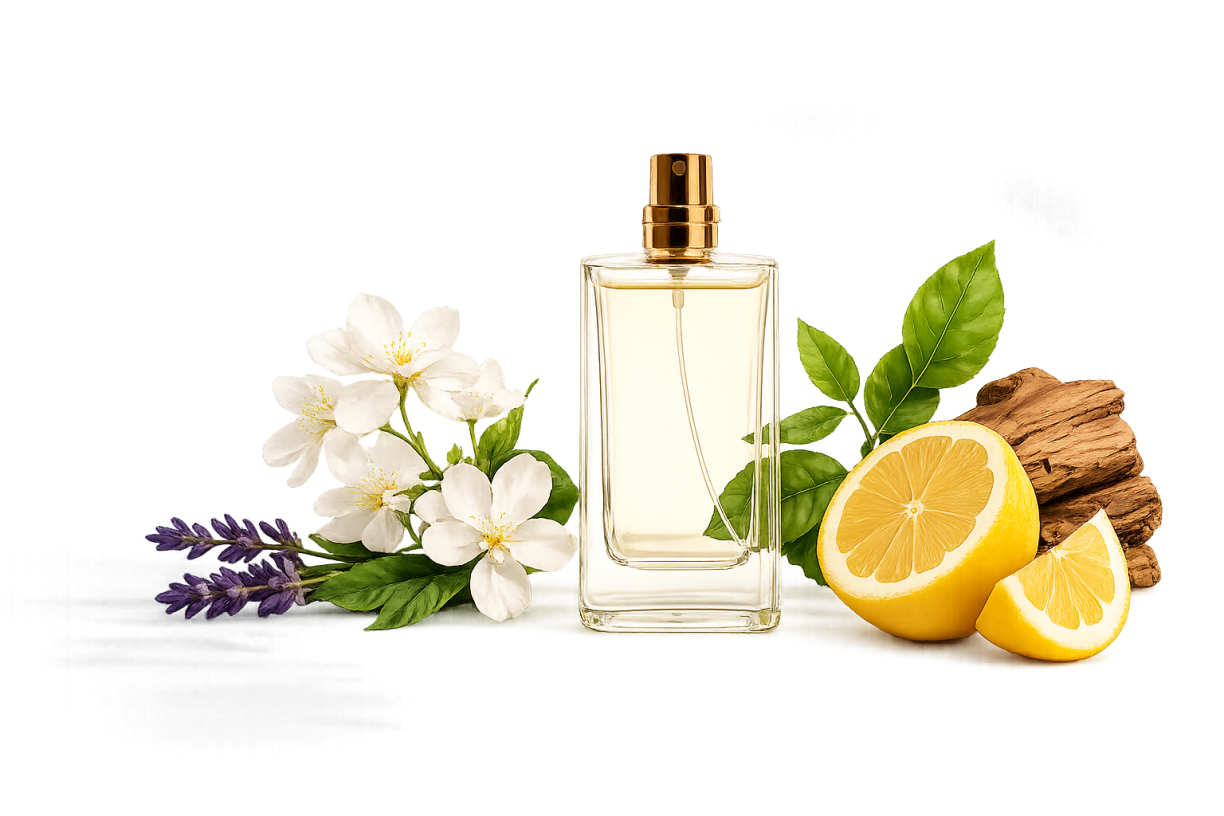
Florals are the heart of perfumery. Each flower has a distinct personality, from shy peony to narcotic tuberose. Knowing the difference helps you shop without surprises. "Floral" on a label can mean anything from a single dewy petal to a full garden at midnight. The note list is where the truth lives.
Rose and jasmine: the classics
- Rose is timeless. It can smell fresh and dewy, jammy and deep, or dusty and vintage depending on variety and extraction.
- Jasmine is lush and indolic, often reserved for evening. Indole is the molecule that gives jasmine its sensual, almost animalic edge.
- Not everyone smells indole the same way.
- Together, rose and jasmine anchor countless classics and modern orientals alike.
Browse both in the notes glossary before assuming all florals behave the same.
Iris, violet, and powder
- Iris root smells like violet and old lipstick: elegant, powdery, and slightly cold.
- Violet leaf adds a green, cut-stem quality that perfumers use to keep iris from feeling too cosmetic.
- Powdery florals are ideal for understated professional wear when applied lightly.
See musk and powdery accords for how iris fits the wider soft palette.
Neroli, orange blossom, and osmanthus
Citrus-floral bridges
All three bridge citrus and floral families beautifully. Read citrus ingredients for the other half of that bridge.
Soft vs bold white florals
Daytime-friendly florals
- Tuberose, ylang-ylang, and gardenia project further and carry more indolic weight.
- Heavy white florals can overwhelm small offices. Save them for evening, outdoor events, or apply under clothing so they bloom gradually on skin.
Tuberose is the diva of white florals: gorgeous, loud, and not apologizing.
Read floral and woody notes: when to wear for timing advice.
Florals in the base: not just a top-note story
- Many wearers assume florals only appear at the opening. In practice, jasmine, rose, and orange blossom often sit in the heart or base, where they warm up and become creamier over hours.
- A perfume that opens citrus and dries down to jasmine tells a completely different story than one that leads with jasmine from the first spray.
- Check all three pyramid levels when shopping.
Read why perfume changes over time to understand how the same floral note shifts character from opening to drydown.
Explore florals on Scentapedia
Search any floral in the notes glossary and filter Browse by floral accords to compare styles. Read floral fragrances for family-level context and woody floral accords when you want florals grounded by something more lasting than petals alone.