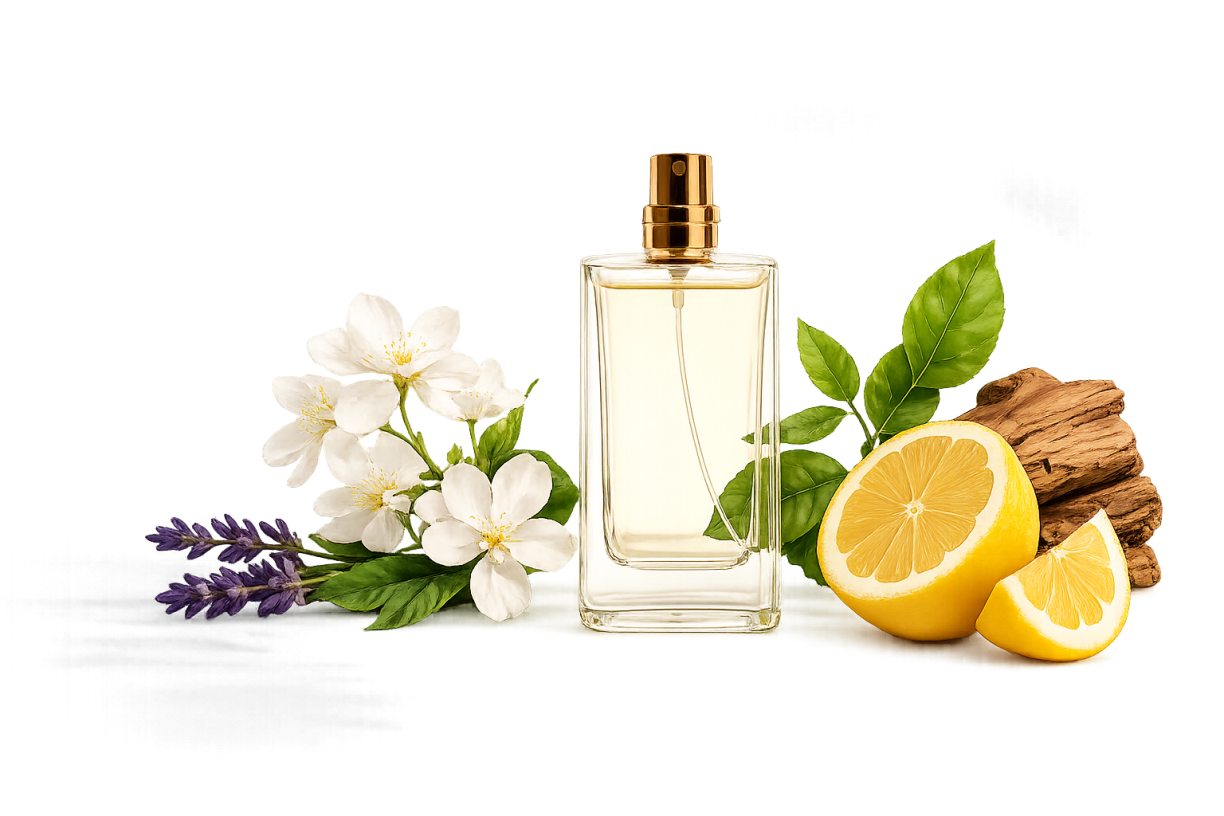
A fresh perfume may suggest citrus peel, green leaves, water, or clean musk. Decide which impression you want to preserve before adding another perfume. A citrus opening can be brief even when the perfume’s woody or musky base lasts well.
Choose the change, then the partner
- For a different freshness, compare citrus with green or aromatic profiles. Two fresh perfumes can contribute different effects.
- For a drier impression, explore a woody partner whose later smell you already enjoy.
- For a floral detail, try a flower-led partner. Check whether its sweetness and strength suit your fresh perfume.
These are directions to explore, not reliable predictions for every bottle in a category. An aquatic perfume can have a strong base, and a woody perfume can be very sweet. Wear the candidate alone before assuming what it will add.
Do not confuse a lasting partner with lasting citrus
If you add a woody perfume and detect wood several hours later, the wood may come from the partner. That does not establish that the original citrus impression lasted longer. Record what you recognize, rather than treating any remaining smell as preserved freshness.
If retaining a citrus-like smell throughout the day is your main goal, compare complete perfumes with the later character you want. Layering may give an enjoyable variation, but it does not guarantee a fix for a short opening.
A useful comparison
Imagine a citrus perfume you enjoy but find too sharp at first. Try a quiet, creamy woody sample alone, then compare a low-dose combination on another day. Check whether the opening feels smoother and whether you still enjoy the result after the citrus impression fades. If the partner dominates, choose a quieter candidate rather than assuming you need more citrus.
This is an illustrative experiment. Follow the shared testing method for amounts, placement, and checkpoints. Keep your total application modest enough to assess comfortably.
Freshness does not determine suitability for heat
A bright smell can still be powerful. Check your actual weather, indoor conditions, and amount. Adding a fresh perfume to a heavy application does not reduce the dose already present. Read hot-weather layering for that situation.
Two fresh perfumes can still be different
Suppose a citrus perfume feels juicy and slightly sweet, while a green aromatic sample feels leafier and drier. Combining them might offer a contrast you enjoy even though both are described as fresh. It might also become sharper than you prefer. The shared label does not decide the result.
Compare the pair with each perfume alone and check the later character. If the green partner adds useful detail only early, decide whether that brief change is enough reason to use both. It does not have to transform every hour to be enjoyable.
If the combination is less pleasant than solo wear, keep the perfumes separate. Fresh-with-fresh is neither automatically redundant nor automatically compatible.
Content reviewed: 5 October 2026.